11 Cozy Primitive Fall Crafts for Rustic Autumn Decor
Fall is the perfect season to slow down, get creative, and fill your home with warmth. If you love simple, rustic décor with an old-fashioned soul, you’re going to adore these ideas.
This collection of 11 primitive fall crafts is designed for anyone who wants beautiful results without complicated techniques. Grab your supplies and let’s get started.
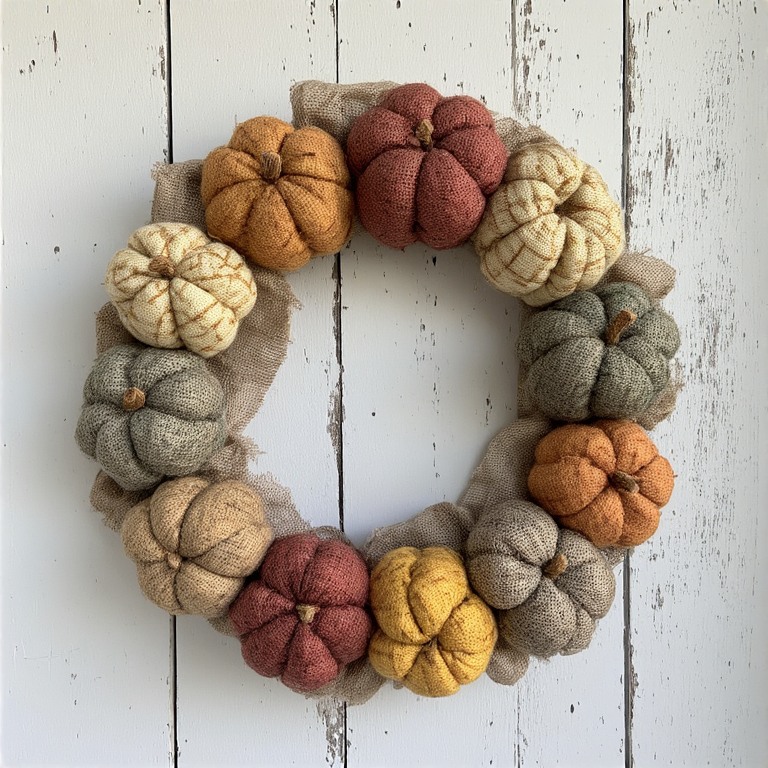
1. Burlap Pumpkin Wreath
A Classic Among Primitive Fall Crafts
A burlap pumpkin wreath captures that timeless farmhouse charm perfectly. It’s textured, neutral-toned, and looks stunning on a front door or above a fireplace mantel.
Materials:
- Grapevine wreath base (12–14 inches)
- Burlap ribbon (2.5 inches wide)
- Orange and cream fabric scraps
- Floral wire
- Hot glue gun
- Dried leaves or twigs (optional)
Steps:
- Wrap the grapevine wreath loosely with burlap ribbon, securing with hot glue at intervals.
- Cut fabric scraps into pumpkin shapes and stuff lightly with fiberfill.
- Hand-stitch or glue the edges closed, then attach a twig as a stem.
- Wire the fabric pumpkins onto the wreath in clusters of three.
- Tuck in dried leaves or sprigs of wheat for texture.
- Time: 45–60 minutes
- Difficulty: Easy
💡 Tip: Use a mix of orange, cream, and mustard fabric for a more authentic primitive look.
2. Distressed Wooden Pumpkin Sign
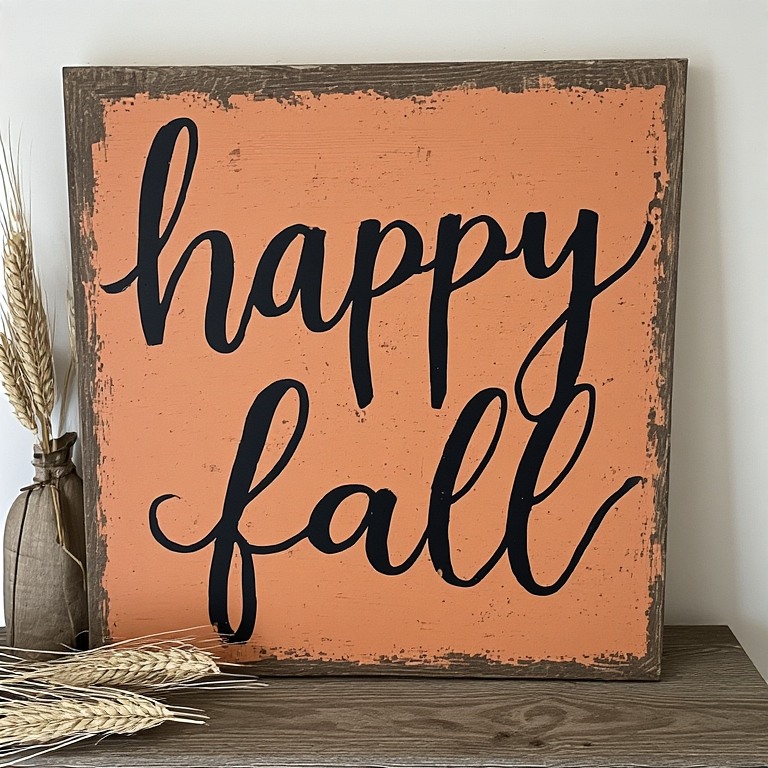
Wooden signs with a worn, painted finish are a staple of primitive décor. This one doubles as seasonal art and adds instant character to any wall or shelf.
Materials:
- Wood plank or board (12 x 6 inches)
- Orange, black, and cream acrylic paint
- Sandpaper (medium grit)
- Stencil or freehand lettering
- Paintbrush
- Twine for hanging
Steps:
- Paint the wood board with a base coat of cream or white. Let dry completely.
- Lightly paint over with orange, leaving some cream showing through.
- Sand the edges and surface once dry to create a distressed look.
- Use a stencil or freehand to write “Happy Fall” or “Give Thanks” in black paint.
- Drill two small holes at the top and thread twine for hanging.
- Time: 30–45 minutes
- Difficulty: Easy
💡 Tip: A black wash (watered-down black paint) wiped over the surface adds extra aged depth.
3. Primitive Rag-Tied Corn Stalks Bundle
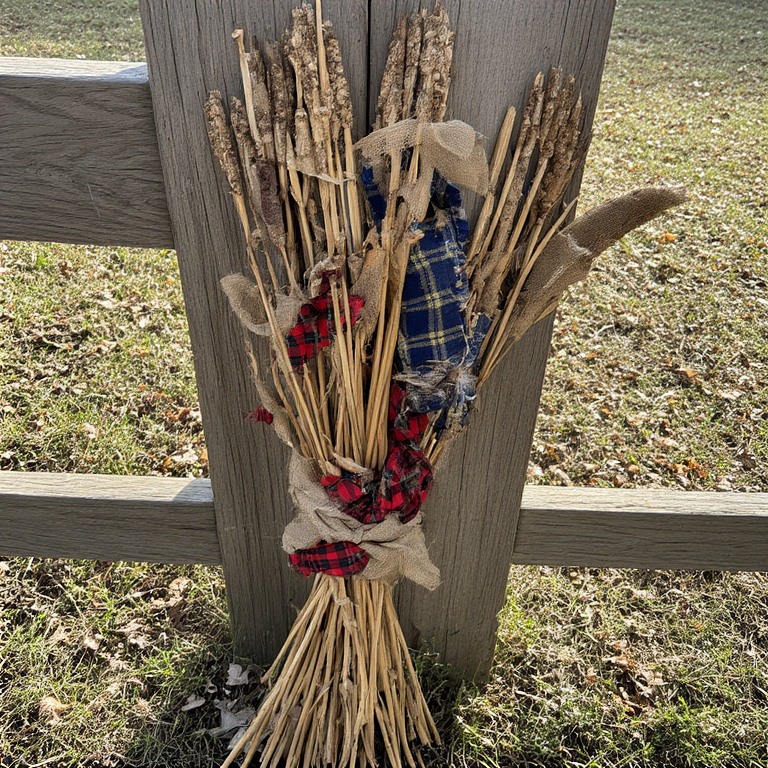
Bundles of dried corn stalks tied with torn fabric strips are one of the most traditional primitive fall decorations. They look beautiful flanking a doorway or leaning against a fence post.
Materials:
- 4–6 dried corn stalks
- Torn fabric strips (burlap, homespun, or flannel)
- Jute twine
- Dried gourds or mini pumpkins (optional)
Steps:
- Group the dried corn stalks together and align the bases.
- Tie tightly with jute twine at the base, middle, and top.
- Layer torn fabric strips over the twine in different colors, tying in loose bows.
- Lean the bundle against a wall or post and arrange mini pumpkins at the base.
- Time: 15–20 minutes
- Difficulty: Easy
💡 Tip: Flannel fabric in plaids gives the most authentic primitive look.
4. Homespun Fabric Garland
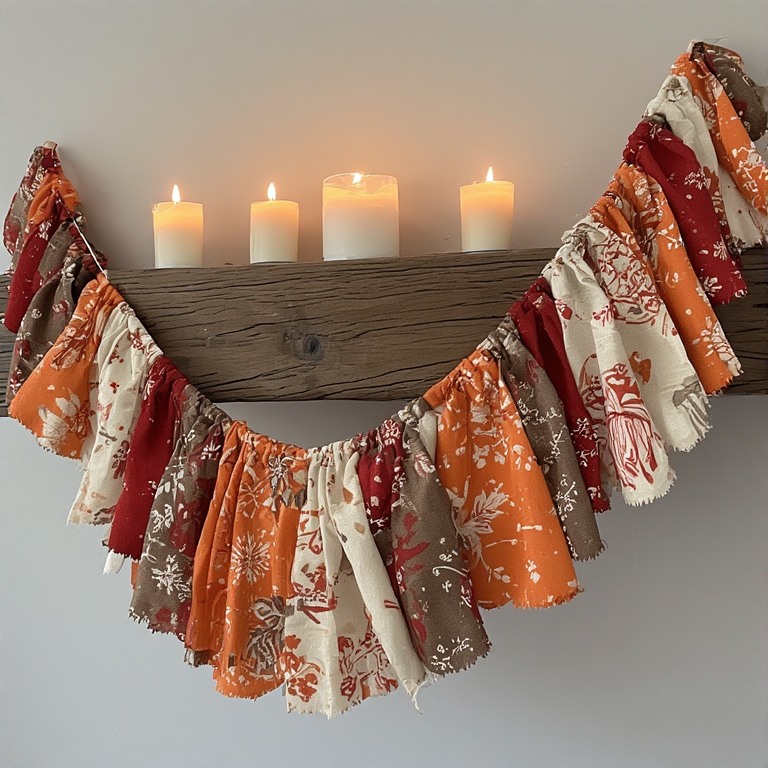
A simple fabric garland made from torn strips of homespun or flannel gives any room a cozy, hand-crafted feel. No sewing required.
Materials:
- Homespun or flannel fabric in fall colors
- Scissors
- Jute twine (4–6 feet)
- Ruler
Steps:
- Cut or tear fabric into strips approximately 1 inch wide and 6 inches long.
- Fold each strip in half and loop it through itself onto the twine (lark’s head knot style).
- Pack the strips tightly together along the twine.
- Alternate colors for a scrappy, charming finish.
- Hang across a mantel, window, or bookshelf.
- Time: 20–30 minutes
- Difficulty: Easy
5. Painted Crow on Driftwood Perch
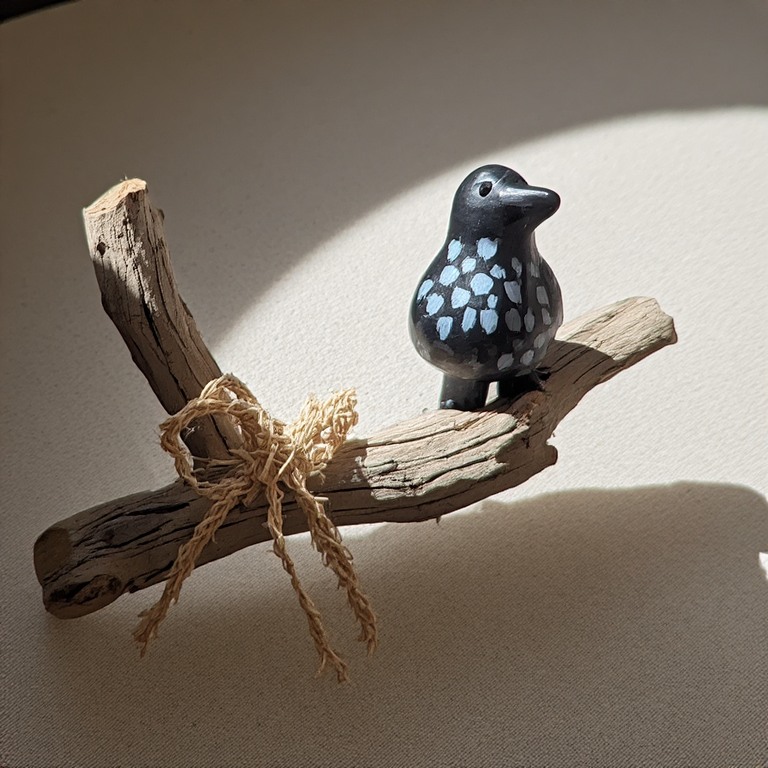
Crows are a beloved motif in primitive folk art. This simple painted crow decoration is quirky, seasonal, and full of charm.
Materials:
- Driftwood or weathered branch (8–12 inches)
- Air-dry clay or carved wood piece for the crow
- Black, orange, and yellow acrylic paint
- Hot glue
- Raffia or jute for a bow
Steps:
- Shape a simple crow body from air-dry clay — elongated oval for the body, small head, pointed beak. Let dry 24 hours.
- Paint the crow entirely in black. Add a small yellow beak and orange feet detail.
- Hot glue the crow to the top of the driftwood or branch.
- Tie a raffia bow at the base of the perch.
- Display on a shelf or tabletop.
- Time: 1–2 hours (including dry time)
- Difficulty: Medium
💡 Tip: A matte finish spray seals the clay and gives a more primitive, flat look.
6. Primitive Fall Crafts: Cinnamon Stick Bundle Candle Ring
From the Heart of Primitive Fall Crafts
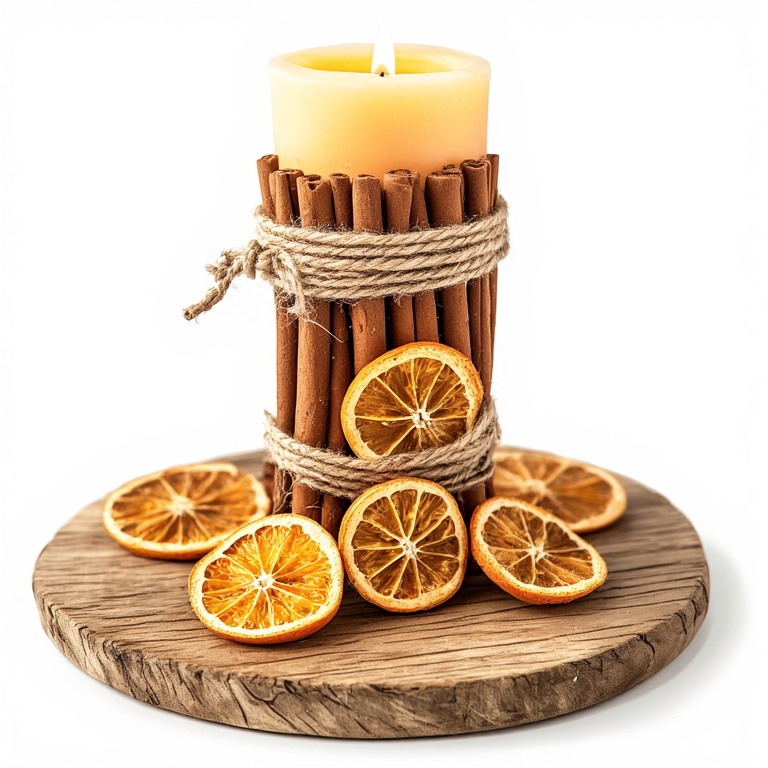
This fragrant, rustic candle ring combines cinnamon sticks, dried orange slices, and natural twine. It’s one of those primitive fall crafts that looks elaborate but takes very little time.
Materials:
- 12–15 cinnamon sticks
- Rubber band
- Jute twine or raffia
- Dried orange slices (2–3)
- Dried rosemary or bay leaves
- Pillar candle
Steps:
- Group cinnamon sticks evenly around a pillar candle and secure with a rubber band.
- Wrap jute twine over the rubber band in tight, neat coils until covered.
- Tie a bow at the front and tuck dried orange slices and leaves under the twine.
- Place the decorated candle on a small wooden board or plate.
- Time: 15–20 minutes
- Difficulty: Easy
⚠️ Safety Note: Never leave a burning candle unattended.
7. Acorn and Twig Topiary Tree
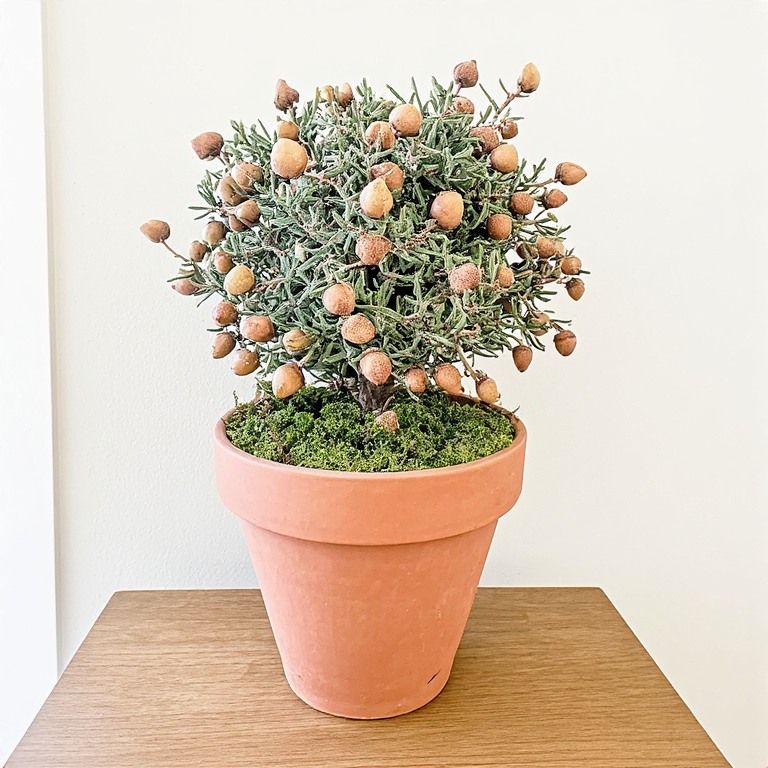
A small tabletop topiary made with real or faux acorns and twigs is a stunning primitive centerpiece that looks effortlessly rustic.
Materials:
- Small terra cotta or clay pot
- Floral foam
- A sturdy twig (8–10 inches)
- Styrofoam ball (3–4 inch diameter)
- Hot glue
- Acorns (real or faux)
- Moss
Steps:
- Press floral foam into the terra cotta pot and insert the twig firmly in the center.
- Push the Styrofoam ball onto the top of the twig.
- Hot glue acorns tightly all over the Styrofoam ball until covered.
- Cover the top of the pot with sheet moss.
- Display solo or in a trio for a more dramatic effect.
- Time: 30–45 minutes
- Difficulty: Easy
💡 Tip: Spray the finished topiary with a light coat of matte sealer to preserve it for multiple seasons.
8. Dried Herb and Lavender Broom
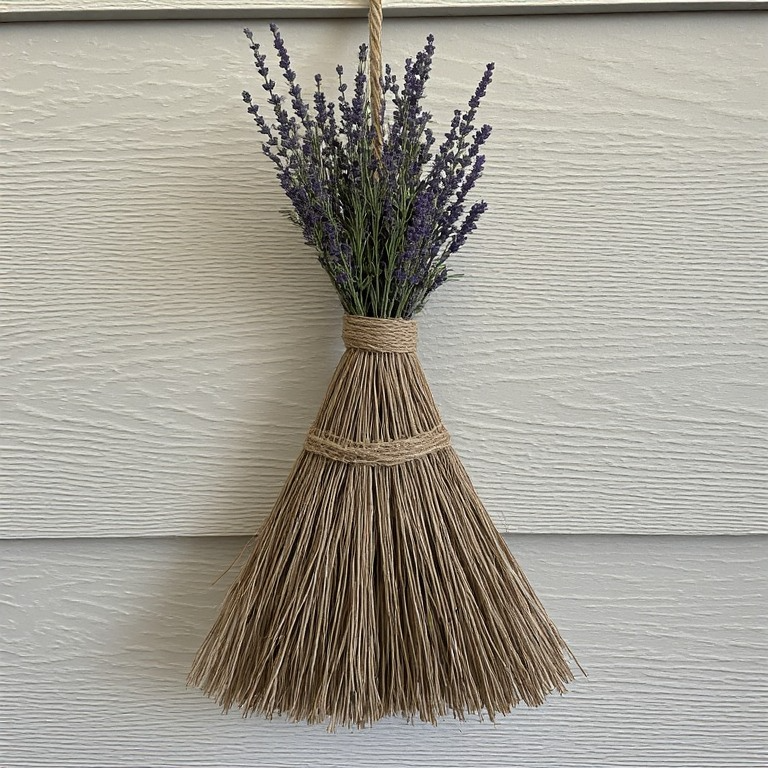
A small decorative broom made from dried herbs like lavender, rosemary, or wheat is both fragrant and beautiful — a true primitive fall staple.
Materials:
- Wooden dowel or sturdy twig (12–16 inches)
- Dried lavender, rosemary, or wheat bundles
- Jute twine
- Scissors
- Optional: small dried rosebuds or berries
Steps:
- Gather dried herb bundles and align them evenly around the base of the dowel.
- Hold firmly and begin wrapping tightly with jute twine, working upward 2–3 inches.
- Tie off securely and trim herb ends to create an even broom shape.
- Add optional dried flowers or berries by tucking them under the twine.
- Hang on a wall, door, or kitchen peg rack.
- Time: 20–30 minutes
- Difficulty: Easy
9. Salt Dough Leaf Ornaments
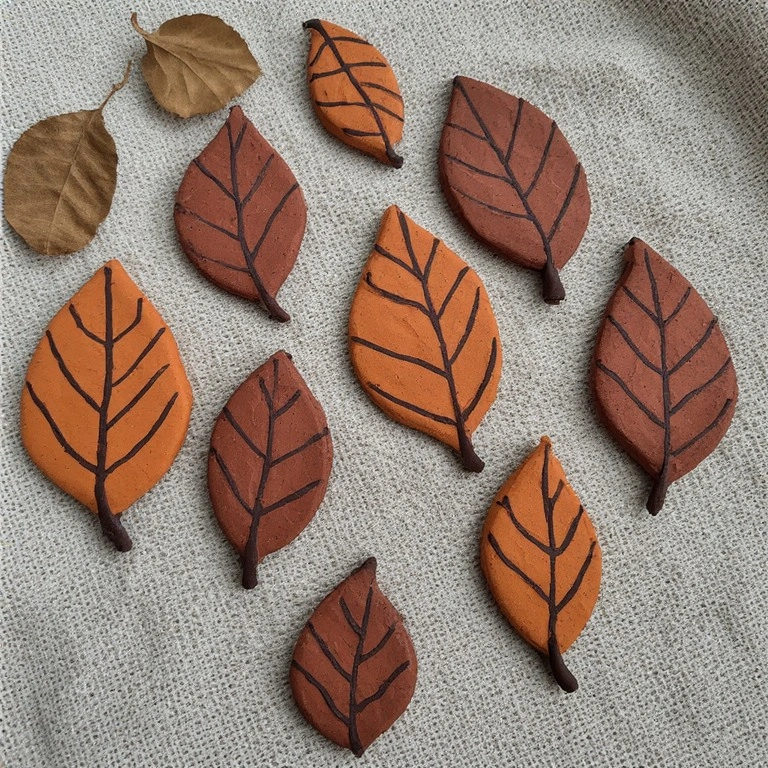
Salt dough is a beloved medium for primitive crafters. These simple leaf ornaments can be hung, stacked in a bowl, or displayed on a wire tree.
Materials:
- 1 cup flour
- ½ cup salt
- ½ cup water
- Rolling pin
- Leaf-shaped cookie cutters
- Straw or skewer (for holes)
- Brown or terracotta acrylic paint
- Jute twine
Steps:
- Mix flour, salt, and water until a smooth dough forms.
- Roll out to about ¼ inch thickness on a floured surface.
- Cut out leaf shapes and use a straw to poke a hole near the top.
- Bake at 200°F (93°C) for 2–3 hours until hard.
- Let cool, then paint in earthy browns, oranges, and creams.
- Thread jute twine through the hole for hanging.
- Time: 3–4 hours (including bake time)
- Difficulty: Easy
💡 Tip: A light dry-brush of cream paint over brown gives a more aged, primitive finish.
10. Feed Sack Pillow Cover
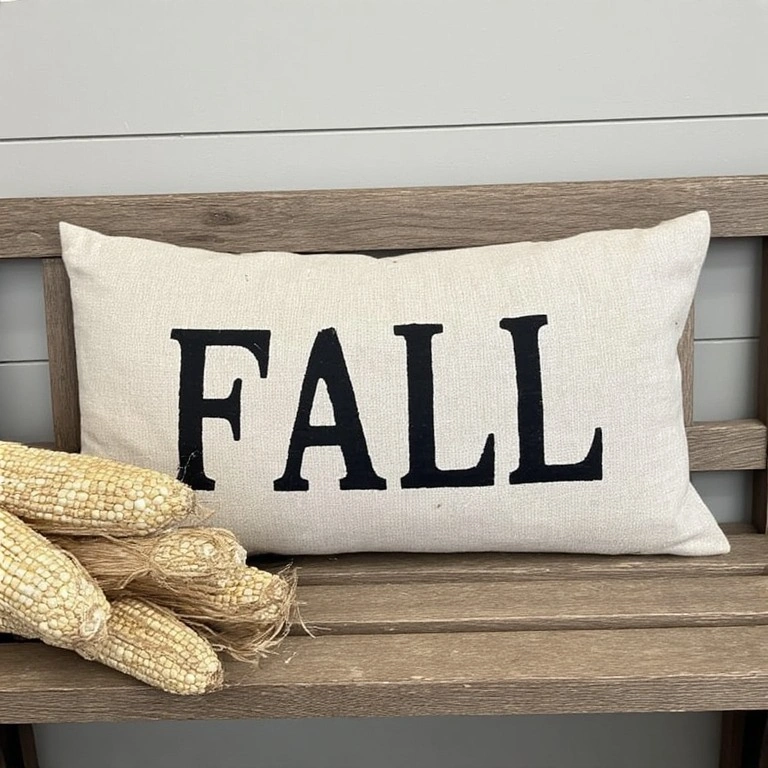
Feed sack fabric has a rich history in American folk crafts. Recreating this look with modern grain-sack-style fabric gives a pillow an instant primitive personality.
Materials:
- Grain sack or striped fabric (18 x 18 inches, two panels)
- Sewing machine or fabric glue
- Pillow insert (16 x 16 inches)
- Fabric marker or stencil
- Jute twine
Steps:
- Cut two equal fabric panels slightly larger than your pillow insert.
- Stencil or freehand a simple primitive image — a crow, leaf, or the word “FALL” — onto one panel using black fabric paint.
- Place panels right sides together and sew three sides.
- Turn right-side out, insert pillow form, and hand-stitch or use an envelope closure for the fourth side.
- Tie a small bow of jute twine at one corner for detail.
- Time: 45–60 minutes
- Difficulty: Medium
11. Primitive Fall Crafts: Beeswax Taper Candles
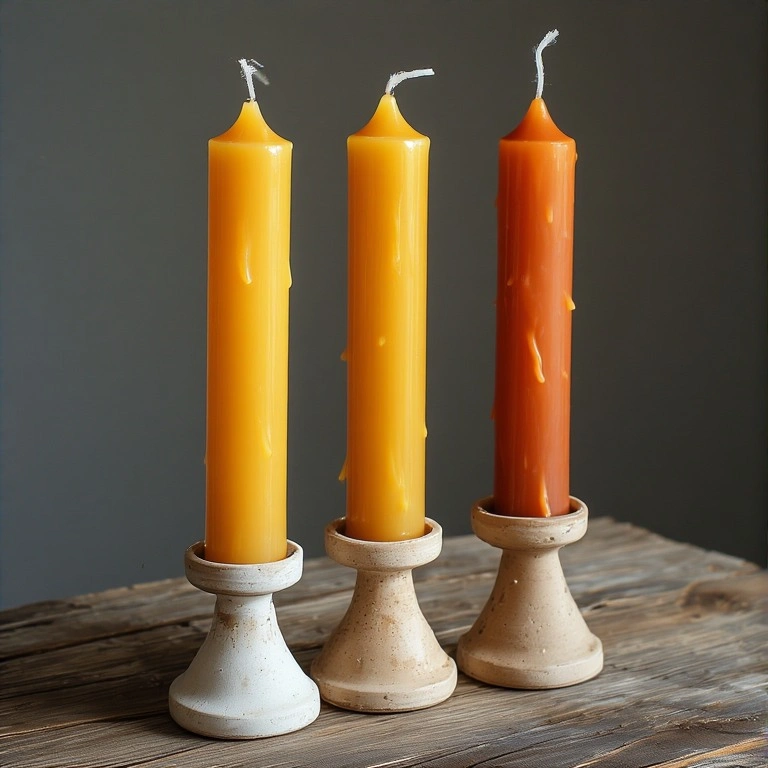
The Most Rewarding of All Primitive Fall Crafts
Rolling beeswax taper candles is one of the oldest and most satisfying primitive fall crafts you can try. The natural honey scent and golden color are simply perfect for the season.
Materials:
- Beeswax sheets (natural or dyed in fall colors)
- Wicking cord (pre-waxed)
- Scissors
- Ruler
- Cutting mat
Steps:
- Cut a beeswax sheet to 8 x 8 inches (or the length you want your candle).
- Cut a piece of wicking 1 inch longer than the sheet width.
- Lay the wick along one edge of the wax sheet and press gently to adhere.
- Roll the wax tightly and evenly around the wick, keeping edges aligned.
- Press the final edge firmly to seal. Trim the wick to ¼ inch at the top.
- Time: 10–15 minutes per candle
- Difficulty: Easy
💡 Tip: Warm the beeswax sheet slightly with a hairdryer before rolling — it becomes more pliable and easier to handle.
Common Mistakes to Avoid
- Using craft paint without sealing — Acrylic paint on wood or clay will chip and scratch over time. Always finish with a matte sealer spray to protect your work and extend its life through multiple seasons.
- Rushing the drying process — Whether it’s salt dough, clay, or painted wood, skipping proper drying time causes cracking, peeling, and smearing. Patience is part of the process.
- Overcomplicating the color palette — Primitive style is rooted in simplicity. Too many bright colors can make a piece look modern rather than rustic. Stick to muted, earthy tones: cream, black, pumpkin orange, barn red, and mustard.
Tips for Best Results
- Shop your home first — Twigs, pinecones, dried leaves, and gourds are free and authentic.
- Embrace imperfection — Uneven stitches and slightly wobbly lines make primitive crafts feel genuinely handmade, not mass-produced.
- Layer your displays — Stack books, use wooden crates, and vary heights to create a curated vignette rather than just placing items in a row.
- Stick to a limited palette — Black, cream, pumpkin, mustard, and barn red work together in almost every combination.
- Use natural textures — Burlap, homespun, jute, and raw wood reinforce the primitive aesthetic far better than synthetic materials.
- Make multiples — Many of these crafts look best in groups of three or five — a row of beeswax candles, a trio of topiaries, or a cluster of crow ornaments.
Frequently Asked Questions
Q: What does “primitive” mean in crafting? Primitive crafts draw inspiration from early American folk art and colonial-era handmade goods. They emphasize natural materials, simple techniques, muted colors, and intentionally imperfect finishes that evoke a handcrafted, old-world charm.
Q: Do I need any special tools to make these crafts? Most of these projects require only basic supplies: a hot glue gun, scissors, acrylic paint, and natural materials like twigs or burlap. A few projects use a sewing machine, but fabric glue works as an easy substitute.
Q: How long will these decorations last? With proper sealing and careful storage, most of these crafts can be reused for many seasons. Store them in acid-free tissue paper in a dry box to prevent moisture damage.
Q: Can kids make these crafts? Many of these — like the fabric garland, salt dough leaves, and beeswax candles — are very beginner-friendly and suitable for older children with minimal supervision. Just supervise any hot glue gun use.
Q: Where can I find homespun or grain sack fabric? Check local fabric or quilting stores, Etsy, or even thrift stores. Old flannel shirts and vintage dish towels are wonderful authentic alternatives.
Q: Can I sell these crafts? Absolutely. Primitive fall décor is highly popular at craft fairs, farmers’ markets, and on Etsy. Handmade items with a rustic, authentic feel tend to sell very well in autumn.
Conclusion
There’s something deeply satisfying about slowing down and making something with your hands — especially when the result fills your home with warmth and character. These 11 primitive fall crafts prove that the most beautiful seasonal décor doesn’t need to be expensive or complicated.
Pick one project, gather your materials, and enjoy the process. Once you start, you’ll want to make them all. Happy crafting!